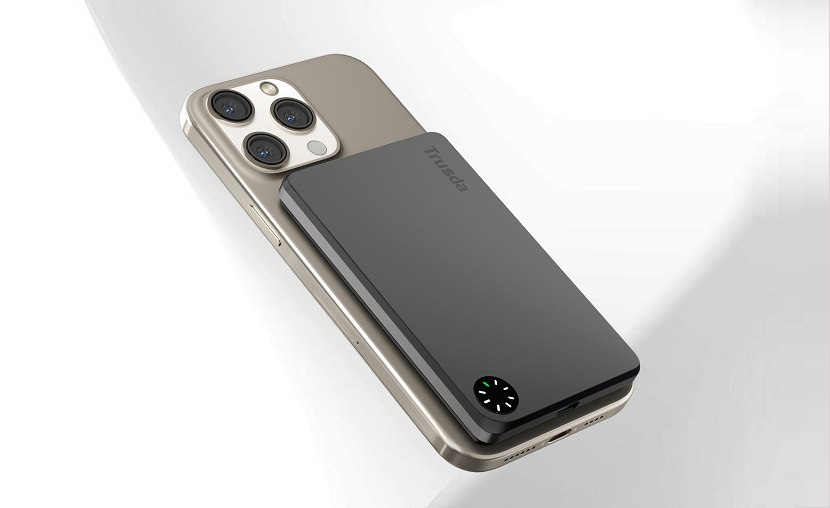
Safety Guide: Are you worried about the explosion of power bank?
Recently, a news story on YouTube sparked discussions online with its headline: "Power bank explodes on plane, forcing emergency landing." The news narrated an incident where a flight from Boracay Island, Philippines to Shanghai had to make an emergency landing in Hong Kong due to a power bank explosion while a passenger was charging their iPad.
As a professional manufacturer of portable power banks, Trusda is here to provide you with insights into using power banks on airplanes and what to do in case of a power bank explosion.
Safety Measures and Airline Regulations:
To mitigate potential safety hazards, airlines require passengers to carry portable power banks with specific specifications. Please note that mobile power banks cannot be carried in checked baggage and must be carried with you. If you're interested in learning more about these requirements, please refer to our previous article titled "The Complete Guide: Can I Bring My Power Bank On A Plane".
Even when carrying compliant power banks, certain airlines emphasize that the use of power banks to charge electronic devices is not permitted during the flight. For power banks equipped with an on/off switch, it should remain turned off throughout the flight.
Factors Contributing to the Risk:
Lithium Battery Chemistry: Power banks typically utilize lithium batteries as energy storage devices. While lithium batteries offer high energy density, they can undergo thermal runaway under specific conditions, leading to explosions.
Thermal Runaway Risk: Thermal runaway can be induced by factors such as changes in cabin pressure and temperature during the flight, electromagnetic interference from aviation electronic equipment, and prolonged continuous use of power banks.
Manufacturing Defects and Low-Quality Products: Some power banks may have manufacturing defects or employ low-quality batteries, increasing the risk of malfunctions and explosions.
Dealing with Unexpected Situations:
In the event of an emergency during the flight, it is crucial to immediately seek assistance from the flight crew and avoid taking matters into your own hands. If a power bank falls into the seat gap, do not attempt to retrieve it yourself to prevent potential compression or fire hazards. Instead, seek help from the flight crew to safely retrieve it.
If a power bank shows signs of self-ignition, report it promptly to the flight crew, who will handle the situation professionally to ensure the safety of all passengers and prevent any harm or potential threat to the flight.
Certainly, the use of power banks in everyday life is also quite common and carries a certain level of risk.
To prevent potential explosions and ensure the safe use of power banks in your daily routine, it is crucial to follow these guidelines:
Avoid Exposure to High Temperatures and Moisture:
Keep your power bank away from high temperatures, such as direct sunlight or close proximity to heat sources. Excessive heat can cause thermal instability, leading to safety hazards and possible explosions. Additionally, moisture can pose a risk to the internal components of the power bank, so it is important to keep it away from humid environments.
Avoid Squeezing or Impacting the Power Bank:
Power banks contain delicate electronic components that can be damaged by excessive force or impact. Avoid squeezing or dropping your power bank to prevent internal damage that could lead to malfunctions or explosions.
Use High-Quality Adapters:
When charging your power bank, always use a high-quality adapter that is suitable for its specifications. Using incompatible or low-quality adapters can result in overcharging, overheating, and potential safety hazards.
Cease Usage if Overheating, Abnormal Noises, Deformation, or Swelling Occur:
If you notice any signs of overheating, abnormal noises, deformation, or swelling while using the power bank, immediately disconnect it from any devices and stop using it. Continuing to use a malfunctioning power bank can increase the risk of explosions or other safety issues.
Conclusion:
Carrying portable power banks has become a common practice for many travelers and individuals in their daily lives. While power banks pose certain safety risks, following safety guidelines and purchasing products from reputable manufacturers can ensure user safety. Whether in flight or in everyday scenarios, adhering to safety precautions such as avoiding extreme environments, handling power banks with care, using high-quality adapters, and promptly discontinuing use in case of abnormalities is crucial. By prioritizing safety and following guidelines, users can enjoy the convenience of portable power banks while minimizing the risk of accidents or explosions.
Semi-Solid Power Bank Guide 2026: Safer Charging, Longer Battery Life, and What to Check Before Buying
Everything about charging your laptop with a power bank
Related Article